
Stored water is only as clean as the tank it sits in. In Abu Dhabi heat, dust, sediment and warm water work quietly on a tank between cleans, long before anyone notices a change at the tap. That is why water tank cleaning Abu Dhabi is a routine job, not an emergency job — and why the first question is not which product to use, but how often to clean at all.
This guide answers that question for villas and buildings: how often a drinking-water tank should be cleaned, what a proper clean actually covers, what to watch for between cleans, and when a clean is no longer enough.
Water Tank Cleaning Abu Dhabi: How Often Should a Tank Be Cleaned?
For a drinking-water tank, the widely used professional standard in the UAE is at least twice a year — roughly every six months. Many building managers and cleaning teams work to that rhythm, and it is a sensible baseline for a villa tank in Abu Dhabi too. If your building management or local guidance sets a specific schedule for your property, follow that schedule.
Some tanks need cleaning more often than twice a year:
- Rooftop tanks in open sun, where heat speeds up sediment and growth.
- Tanks serving shared buildings, where more people depend on the same stored water.
- Older properties, where pipework can add sediment or discolouration.
- Any tank that has stood empty for a while, or has just had building works nearby, with dust getting in through the lid or vents.
For a tank that does not hold drinking water — irrigation, wash-down or construction use — a yearly inspection and a clean when sediment builds up is usually enough. The twice-a-year rhythm matters most where people drink, cook and wash from the tank.
The simplest habit is a dated record: the date of each clean, written on the tank’s file or kept with the building’s maintenance notes. Without a record, “we cleaned it recently” is a guess, and guesses are how tanks go two years without a clean.
Signs Your Tank Is Overdue
Do not wait for a fixed date if the water itself is telling you something. Book a clean sooner if you notice:
- A change in taste or smell from taps fed by the tank.
- Cloudy water, or grit and sediment settling in a glass left to stand.
- Slime, staining or a musty smell around the lid, vents or fittings.
- A lid that no longer sits flat, letting dust and insects in.
- Building works, a long empty period, or a recent repair that opened the tank.
Any one of these is a reason to inspect, even if the last clean was only a few months ago. A tank that looks fine from outside can still carry sediment on its floor — the signs at the tap are the honest check.
What a Proper Clean Covers
A proper clean is a sequence, not a single step. Skipping a step leaves the job half done. The usual sequence is:
| Step | What happens | Why it matters |
|---|---|---|
| Isolate and drain | Supply isolated, tank drained, remaining water removed | Cleaning a full tank cleans nothing |
| Inspect | Interior, lid seal, fittings, seams and base checked | Finds cracks, worn seals and sediment before they become problems |
| Scrub and remove sediment | Walls and floor scrubbed, sediment and debris removed | Sediment feeds growth and clouds the water |
| Disinfect | Approved disinfectant applied at the correct strength and contact time | Kills what scrubbing alone cannot reach |
| Rinse | Tank rinsed thoroughly until the water runs clear | No disinfectant residue left in drinking water |
| Refill and check | Tank refilled, fittings and lid checked, water checked at taps | Confirms the tank is sealed, clean and back in service |
Ask what was done at each step, and keep the dated record. A clean with no inspection and no record is hard to trust, because there is nothing to check it against next time.
One safety note matters: cleaning inside a large tank is work for a trained team, with safe access, ventilation and a second person present. Never enter a tank alone, and never send someone in without safe access and air. For most villas, the right move is a team that does this work regularly, not a first attempt from a ladder.
Cleaning by Tank Type
The rhythm is the same, but the details change with the material:
- Fibreglass (GRP) tanks have a smooth interior that scrubs clean well. Check the gel-coat surface for roughness or flaking, and check seams and joints on sectional tanks.
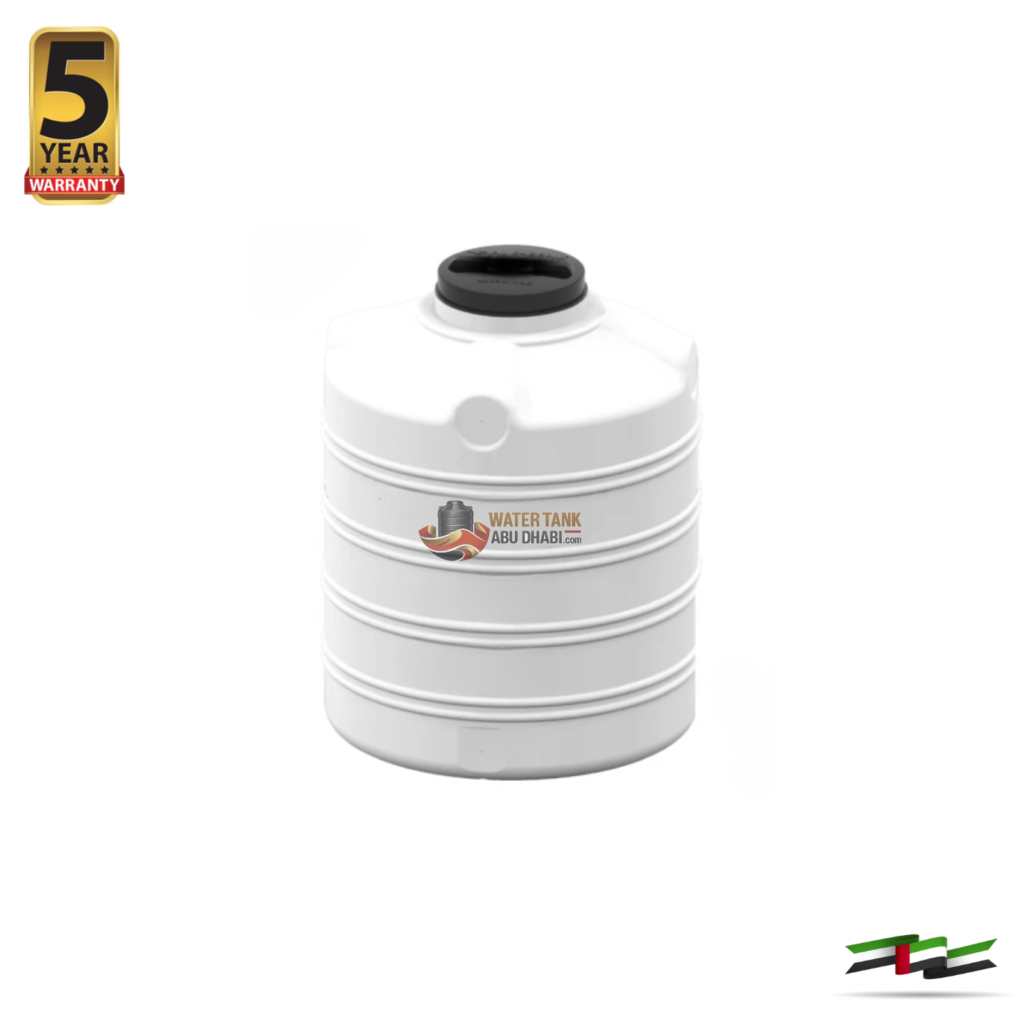
- Plastic tanks are light and simple, but lids and fitting areas wear first in sun. Check the lid seal and the fitting bosses closely during the clean.
- Panel tanks need every joint and seal checked, not just the floor and walls. A panel joint that weeps after a clean needs attention before the tank goes back into service.
- Septic tanks are a different job entirely. They are never cleaned as drinking-water tanks, and cleaning equipment used on a septic tank must never be used on a drinking-water tank. Our guide on why septic and drinking-water tanks must stay separate explains the separation in full.
Whatever the type, the rule after cleaning is the same: refill, check every fitting, and confirm the lid seals flat before the tank returns to daily use.

What Not to Do
- Do not mix drinking-water and septic cleaning — different tanks, different equipment, no exceptions.
- Do not use a harsh or unapproved chemical and hope rinsing fixes it. Use only a disinfectant suitable for drinking-water tanks, at the strength and contact time its guidance specifies.
- Do not skip disinfection because the tank “looked clean”. Clear water can still carry what eyes cannot see.
- Do not skip the rinse. Disinfectant left in the tank ends up in drinking water.
- Do not ignore a cracked lid, a worn seal or a weeping fitting found during the clean. A clean tank with a broken seal will be dirty again soon.
FAQs
Can I clean my villa tank myself?
For a small, easily reached tank, an owner can drain, scrub and rinse — but disinfection, safe access and a proper inspection are where professional teams earn their place, especially for rooftop or large tanks. If safe access is doubtful, use a trained team.
How long will the water be off during a clean?
It depends on tank size and access, but plan for the tank to be out of service for the clean plus refill time. Keep a small reserve of drinking water aside for the day, and agree the timing with the cleaning team in advance.
Will cleaning fix bad-tasting water?
It fixes taste problems that come from the tank — sediment, growth or a dirty interior. If the taste comes from pipework after the tank, cleaning the tank alone will not fix it, and the pipes need checking too.
How do I keep a record of cleans?
Note the date, who cleaned it, what was inspected, and anything found (a worn seal, a repaired fitting). Keep it with the tank’s documents. The record is what turns “twice a year” from an intention into a schedule.
When is replacement smarter than another clean?
When the interior is rough or flaking, seams keep failing, the lid no longer seals, or the tank needs repairs after every clean, the tank itself is the problem. Our guide on when to replace your water tank walks through those signs.
A Clean Tank Is a Quiet Tank
A well-kept tank asks for nothing: clear water, no smell, no sediment, a lid that seals. Water tank cleaning Abu Dhabi is the routine that keeps it that way — twice a year for drinking water as the baseline, sooner when the signs say so, and always with inspection, disinfection, rinse and a dated record. Keep that rhythm, and the tank stops being something to worry about.
For help choosing a tank, see our water tank buying guide, and use the water tank size calculator to check the size for your villa. If you are weighing placement, our overhead vs underground guide compares the two options.