
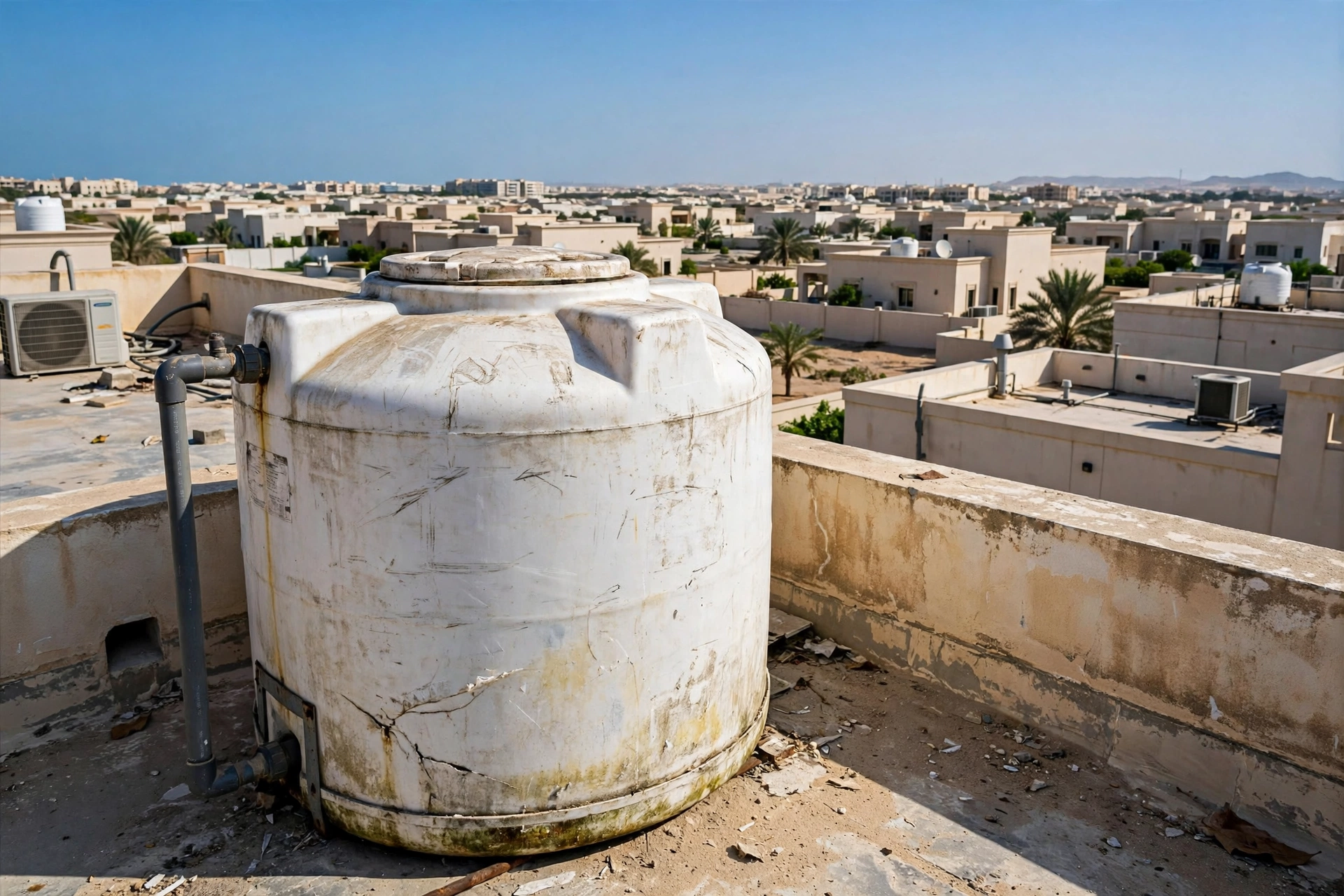
A rooftop water tank Abu Dhabi homeowners rely on is the most common setup for villas across the city — the tank sits above the taps, so gravity does the work and the water flows even when the power is out. It sounds simple, and it usually is, but a roof is a harder place for a tank than the ground. Heat, weight and wind all work on it every day, so a few checks before installation save years of trouble.
Why the roof is different
On the ground, a tank stands on soil or concrete and stays shaded by a wall for part of the day. On a roof, the same tank faces direct sun for most of the day, summer temperatures pass 45°C, and there is nothing to break the wind. The water inside gets warmer, the tank material expands and contracts daily, and every fitting is tested by that cycle. None of this is a reason to avoid a rooftop water tank Abu Dhabi homeowners install — it is a reason to choose the right one and install it properly.
Heat on the roof
Heat is the first thing to think about. Water stored in direct sun warms up fast, and warm water grows algae and picks up a taste. Three things help: material — GRP (fibreglass) tanks keep water cooler than thin plastic in strong sun, because the walls are thicker and insulate better; black UV-stabilised plastic tanks also cope well, because the dark finish resists sun damage. Shade — a simple shade or a GRP enclosure over the tank cuts the sun load more than any material choice. Lid and seals — a tight, undamaged lid keeps dust, insects and sunlight out. Check it every six months — a cracked lid is the most common reason rooftop water turns bad.
Weight: the check nobody should skip
Water weighs one kilogram per litre, so a full tank is far heavier than it looks. A 1,000-gallon tank holds about 3,785 litres — nearly four tonnes of water, plus the tank itself. Before any rooftop installation, confirm the roof structure can carry that weight, plus the tank, plus a person standing beside it for maintenance. This is a question for the villa’s engineer or the building contractor, not a guess. A flat, level, reinforced base spreads the load; a tank placed on an uneven or weak spot will tilt, stress its fittings and eventually leak.
Wind and access
Abu Dhabi gets strong gusts, especially during shamal winds and sandstorms. A rooftop water tank Abu Dhabi homeowners install must sit low and stable, with its base fixed so wind cannot rock it. Leave clear space around the tank: you need room to open the lid, reach the outlet and overflow pipes, and clean the inside. A tank squeezed against a parapet wall with no access is a tank that never gets maintained.
Sizes — fibreglass tanks (Length x Height x Width, cm)
500 gal / 1,892 L — 204 x 130 x 130 | 800 gal / 3,028 L — 204 x 153 x 155 | 1,000 gal / 3,785 L — 226 x 154 x 160 | 1,200 gal / 4,542 L — 224 x 177 x 177 | 1,500 gal / 5,678 L — 283 x 174 x 177 | 2,000 gal / 7,570 L — 309 x 209 x 201 | 2,500 gal / 9,463 L — 301 x 216 x 219 | 3,000 gal / 11,356 L — 394 x 232 x 219 | 4,000 gal / 15,141 L — 460 x 220 x 220 | 5,000 gal / 18,927 L — 467 x 258 x 248
For most family villas, 1,000 to 2,000 gallons is the practical range for a rooftop water tank Abu Dhabi homeowners install — big enough for a day or two of backup, small enough that the roof load stays manageable. Larger tanks usually belong at ground level, where the base can be built for the weight.
Which material for a rooftop?
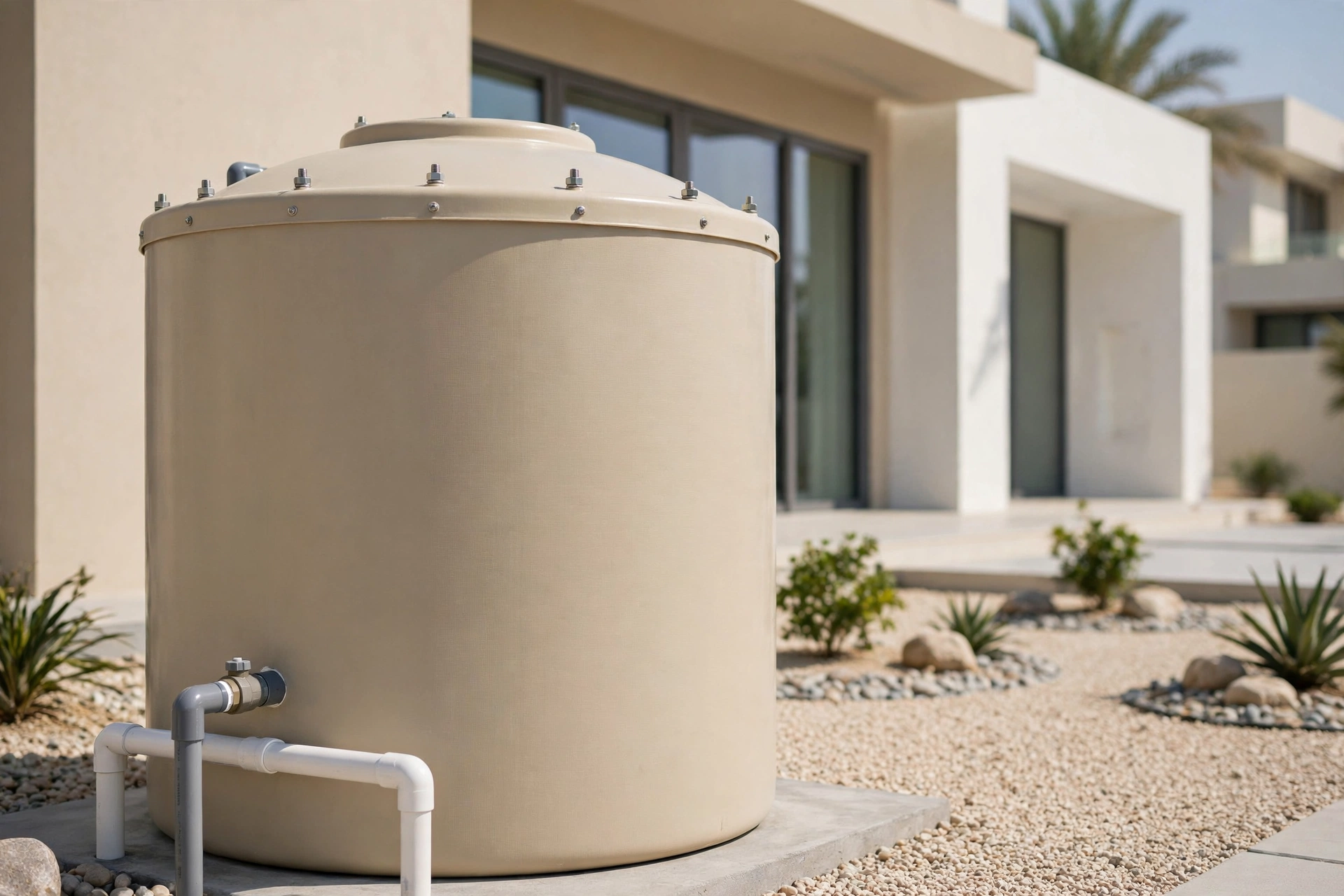
GRP tanks (fibreglass): the strongest choice for exposed rooftops — thick walls, cooler water, long life. Best for villas that plan to stay put for years. Plastic tanks (polyethylene): lighter and easier to lift onto a roof, and the black UV-stabilised finish handles sun well. A good choice when the roof load is tight or the budget is. Used tanks: an inspected used tank works just as well on a roof as a new one, provided it has passed checks for cracks, fittings and lid condition — the same checks any rooftop water tank Abu Dhabi buyer should make. It is the same tank type, at a lower cost.
Read our buying guide first if you have not chosen a material yet — it walks through size, material and condition in one place.
Installation checklist
- Confirm the roof can carry the full weight — ask the engineer, do not guess.
- Build a flat, level base that spreads the load.
- Keep the tank shaded if you can, and always keep the lid sealed.
- Fit an overflow pipe that drains away from the roof edge and walls.
- Check the float valve and all joints after the first fill, then again after a week.
- Leave access space on all sides for cleaning and repairs.
- Plan how the tank gets up there — a crane or a lift, not a carry up the stairs.
Maintenance on the roof
Inspect the lid and seals every six months. Flush sediment from the bottom at least once a year. Look for algae if the tank sits in direct sun, and check pipe connections and the float valve during the same visit. Schedule a proper clean twice a year, and keep a simple log of each inspection: the date, what you checked, and anything you replaced. A rooftop water tank Abu Dhabi homeowners maintain on this schedule stays clean, cool and reliable.
FAQ
What size rooftop water tank do I need in Abu Dhabi?
Most family villas do well with 1,000–2,000 gallons, which covers a day or two of backup without overloading the roof. Measure your space and confirm the roof load first.
Does a rooftop tank make the water hot?
Water in direct sun does warm up. A GRP tank, shade over the tank, and a sealed lid keep it much cooler.
Can any roof hold a water tank?
Not every roof. A full 1,000-gallon tank weighs nearly four tonnes, so the roof structure must be confirmed by the villa’s engineer or contractor before installation.
Is a used tank safe on a rooftop?
Yes, when it has been inspected for cracks, fittings and lid condition. An inspected used tank performs just as reliably as a new one.
How often should a rooftop tank be cleaned?
A proper clean twice a year, with a lid and seal check every six months.
For more guides on sizes, materials and tank care, visit our blog — or start from the home page.