
Walk into any water tank yard in Abu Dhabi and you will see two kinds of tank side by side: light plastic tanks and heavier GRP fibreglass tanks. Both store water. Both are used in villas, buildings and farms across the emirate. But they are made differently, they age differently in Abu Dhabi heat, and they suit different jobs. This guide answers the plastic vs GRP water tank Abu Dhabi question in plain words, so you can choose the right one for your home.
1. The two materials, in plain words
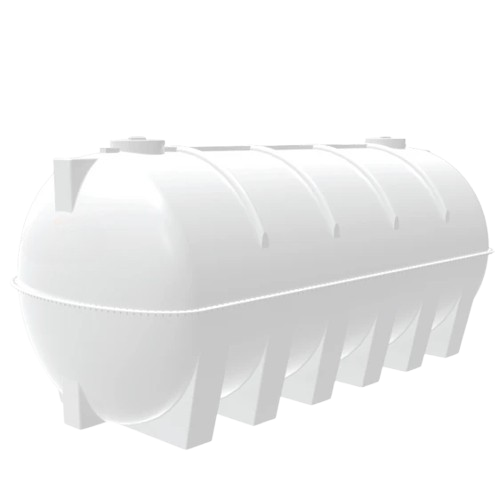
A plastic tank — usually polyethylene — is made in one piece by moulding. It is light, simple, and easy to move into place. A GRP tank — glass reinforced plastic, also called fibreglass — is built from layers of glass fibre set in resin, with a smooth gel-coat skin inside and out. It is heavier and stronger, and it is made in much larger sizes. Neither material is “better” in every case: the right choice depends on the size you need, where the tank will sit, and what the water is for.
2. Plastic vs GRP water tank Abu Dhabi: sizes and where each fits
Plastic tanks cover the everyday range — from a few hundred gallons for a small home up to around 5,000 gallons. They suit villas, small buildings and farms where the size fits and the tank can be delivered in one piece. GRP tanks start where plastic stops: from around 500 gallons up to 20,000 gallons in one piece, and far beyond that as sectional panel tanks assembled on site. If you need a very large tank, or a tank that must be built inside a basement or on a rooftop that a crane cannot reach, GRP panel tanks are the answer. Our supplier guide explains how to check sizes honestly before you buy.
3. Abu Dhabi heat: how each copes
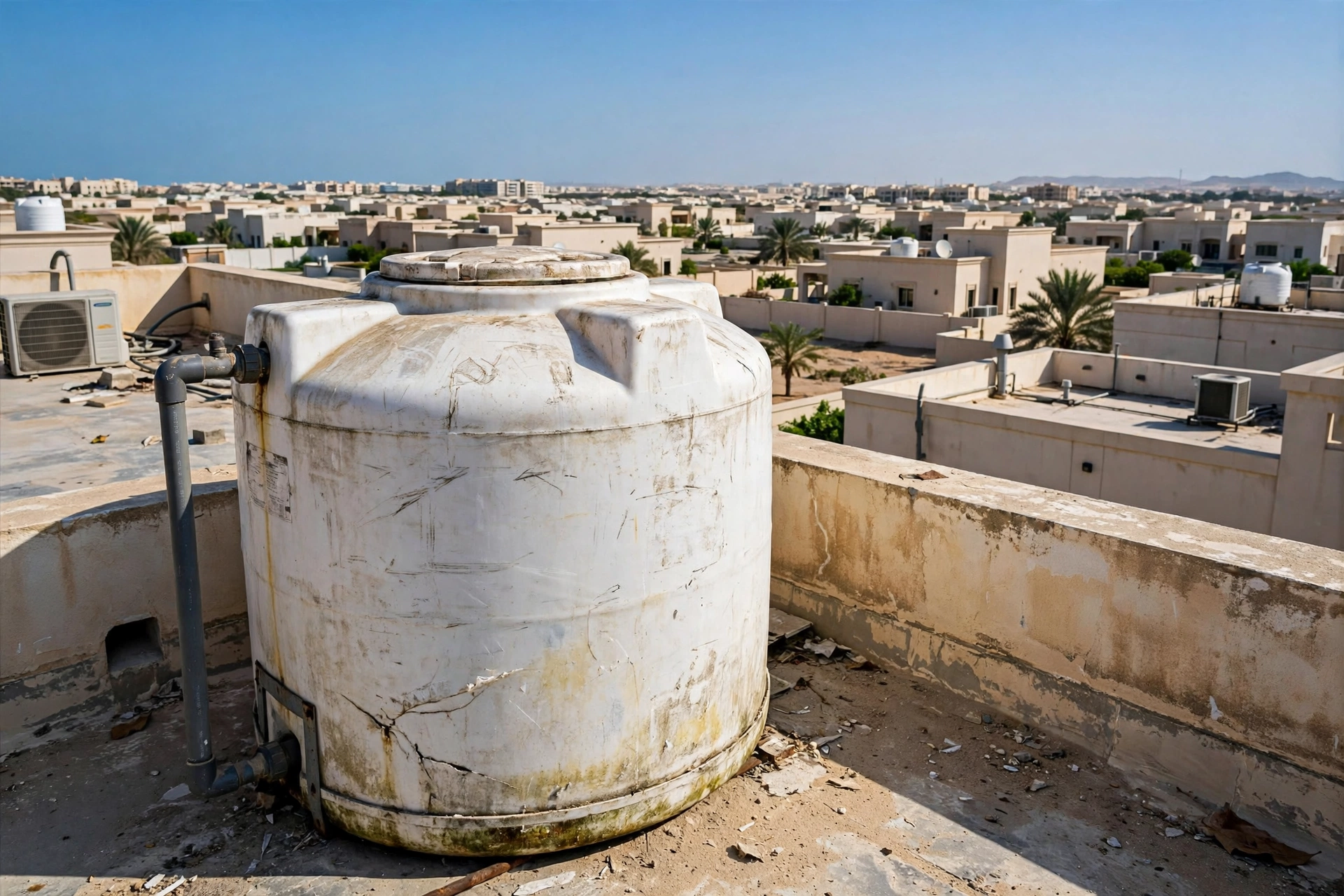
Abu Dhabi heat is the hardest test any tank faces. Plastic tanks handle it well when they are made with UV-stabilised material, but years of direct sun show first on plastic: colour fading, a rough or powdery surface, and in time a lid that warps so it no longer seals flat. GRP tanks cope with heat and sun better — the gel-coat skin resists UV and the shell stays rigid — but they are not immune: the surface can turn dull or chalky after many years, and the fittings and joints still need checking. Whichever material you choose, shade helps: a roof or a cover over the tank slows sun ageing and keeps the water cooler.
4. Lifespan and care
A well-made plastic tank lasts many years, and a well-made GRP tank usually lasts longer — a decade or more is reasonable for GRP with a proper base and simple care. The care routine is the same for both: a flat, level base that supports the whole bottom, a lid that closes and seals, fittings checked twice a year, and the inside surface kept smooth and clean. For drinking water, the material must be food-grade and the tank must hold only clean water — our drinking-water checks apply to both materials alike. A tank of either type that is forgotten until it leaks will fail sooner than one that gets a ten-minute check twice a year.
5. Which one for which home
For a villa with everyday household use, a plastic tank is often enough — light, simple, and easy to place. For a large villa, a building, a labour camp or a farm with high daily use, GRP is usually the stronger choice: bigger sizes, a stiffer shell, and panels that can be replaced one at a time on a sectional tank. For drinking water, either material works when it is food-grade and inspected — the checks matter more than the material. For a rooftop, check the weight and the access first: a plastic tank is lighter to lift, while a GRP panel tank is assembled in place and never needs a crane. Our rooftop guide covers what a roof must carry before any tank goes up.
6. What to check before you buy either
Whatever you choose, run the same checks. Look inside the tank: the surface should be smooth, with no cracks, stains or smell. Check that the lid sits flat and seals. Turn every fitting by hand — inlet, outlet, overflow and drain — and make sure each feels solid, not loose. Ask for the real size in gallons and litres, and the length, width and height, and measure the space you have. And ask the supplier what the tank will sit on: a supplier who talks about the base before talking about delivery is thinking past the sale.
The short version
Plastic is light, simple and right for everyday sizes. GRP is stronger, bigger and longer-lasting, and the only choice for very large tanks. In Abu Dhabi heat, both need shade, a proper base and a twice-yearly check — and the tank that gets those will serve your home for years, whichever material you pick.
Frequently Asked Questions
Which lasts longer in Abu Dhabi heat, plastic or GRP?
GRP usually lasts longer. Its gel-coat skin resists sun and heat better, and the shell stays rigid. A well-made plastic tank still lasts many years, but it shows sun ageing — fading, a powdery surface, a warping lid — sooner than GRP.
Is a plastic tank safe for drinking water?
Yes, when it is made from food-grade material, holds only clean water, and passes the same checks as any drinking-water tank: a smooth clean inside surface, a lid that seals, and fittings in good order.
What is the biggest size for a plastic tank?
Plastic tanks are generally available up to around 5,000 gallons. Beyond that, GRP takes over — up to 20,000 gallons in one piece, and larger as sectional panel tanks assembled on site.
Can a GRP tank go on a villa rooftop?
Yes, and GRP panel tanks are often the best rooftop choice for large sizes because they are assembled in place. Check the roof’s load capacity and the access route first — our rooftop guide covers what to confirm.
Which is cheaper to install?
Installation depends on the size, the site and the base, not the material alone. A light plastic tank is easier to lift into place; a GRP panel tank is assembled on site and needs no crane. Ask for the full picture — tank, base and delivery — before you decide.